
Last updated August 27, 2026
Free in-home measure and quote - PGT, CGI and CWS impact lines compared on your actual openings, style by style
Sliding glass doors
Impact garage doorsPGTCGI
 Before
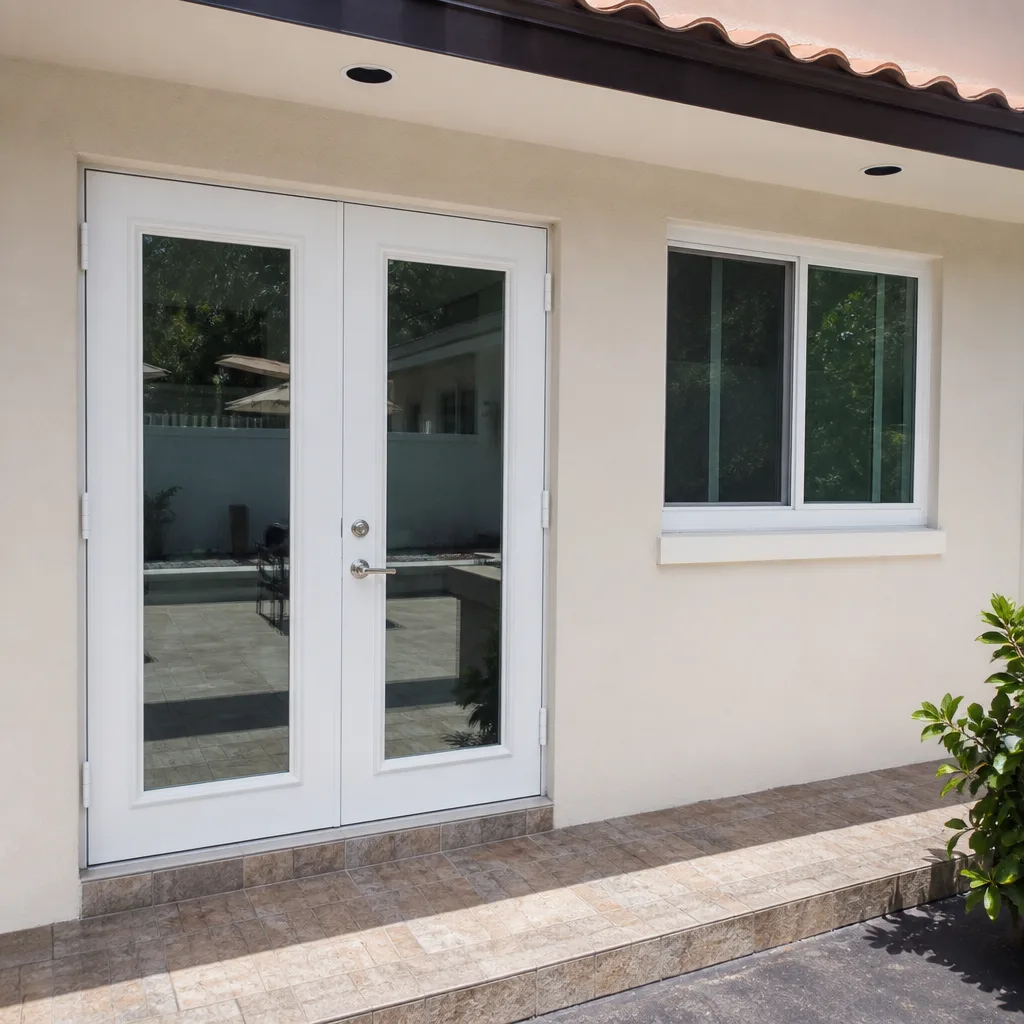 After
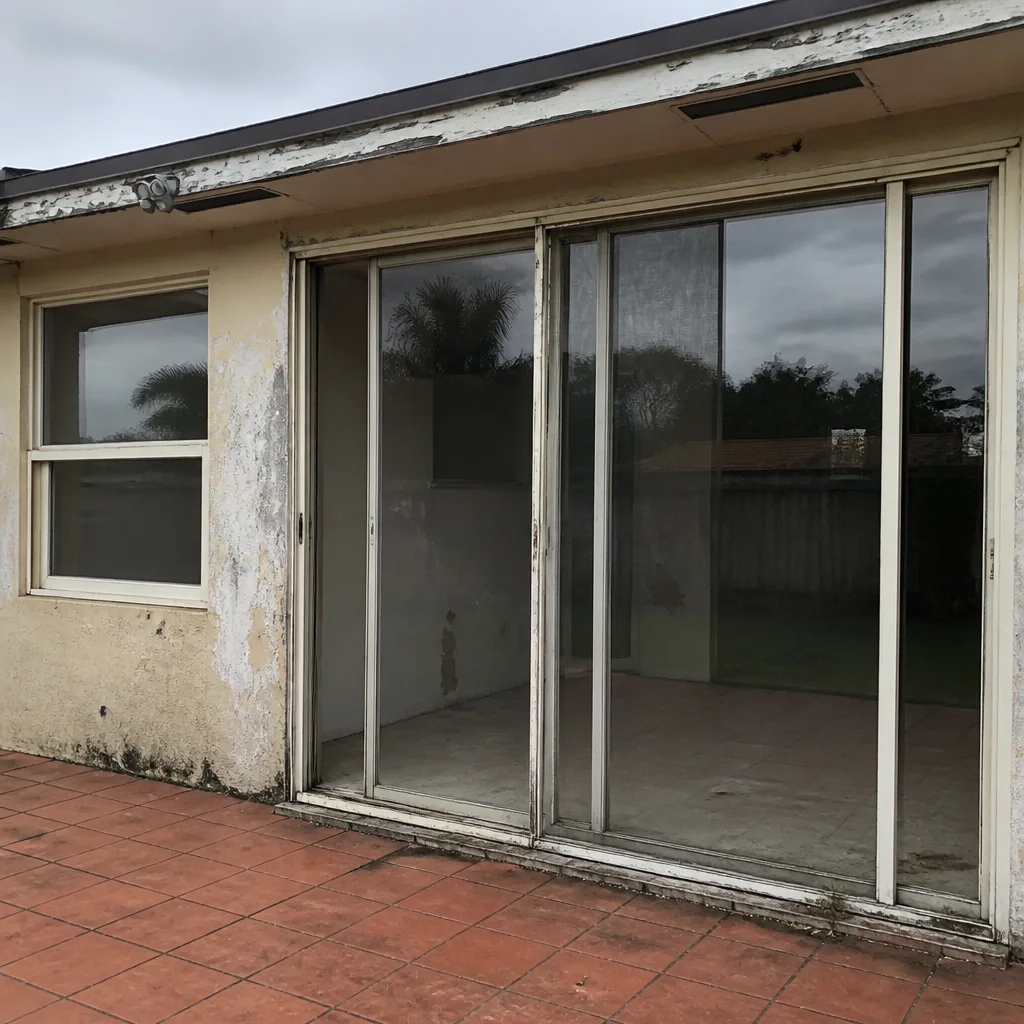 Before
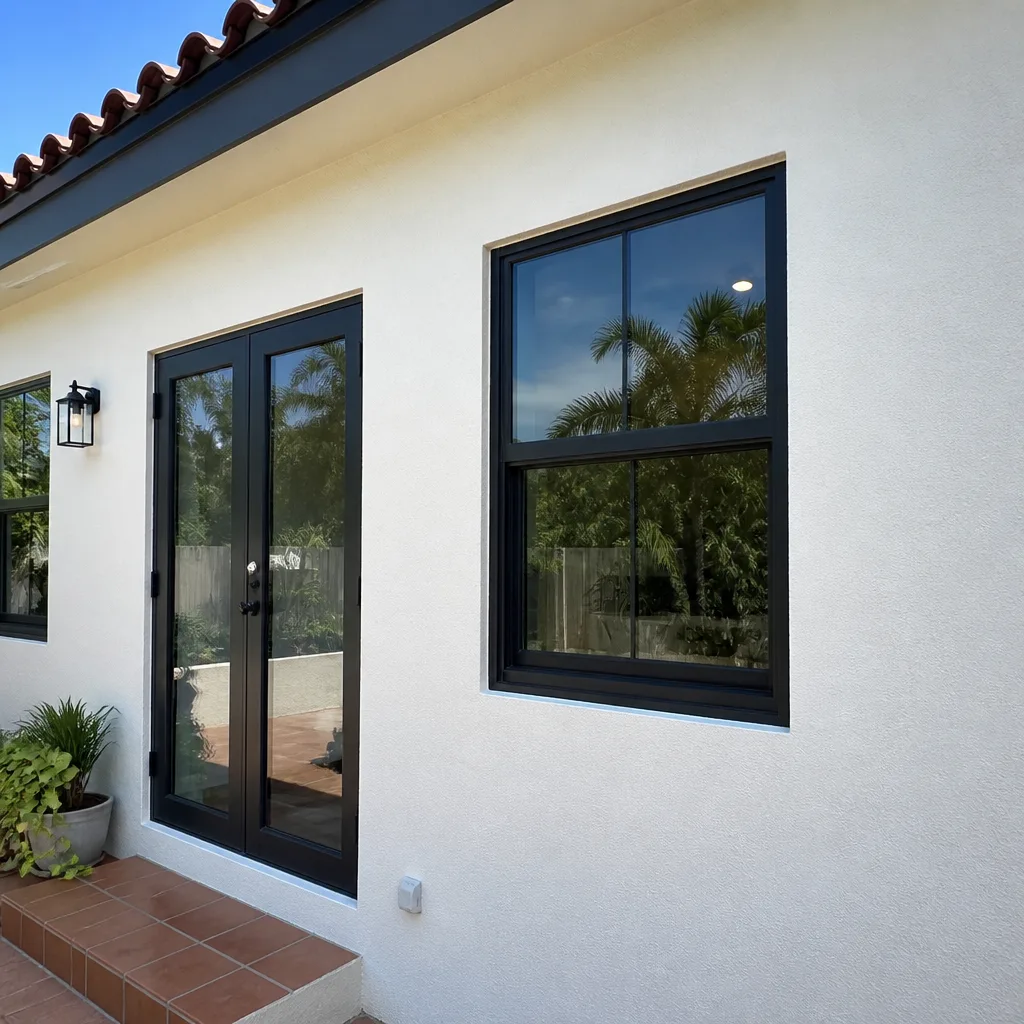 After
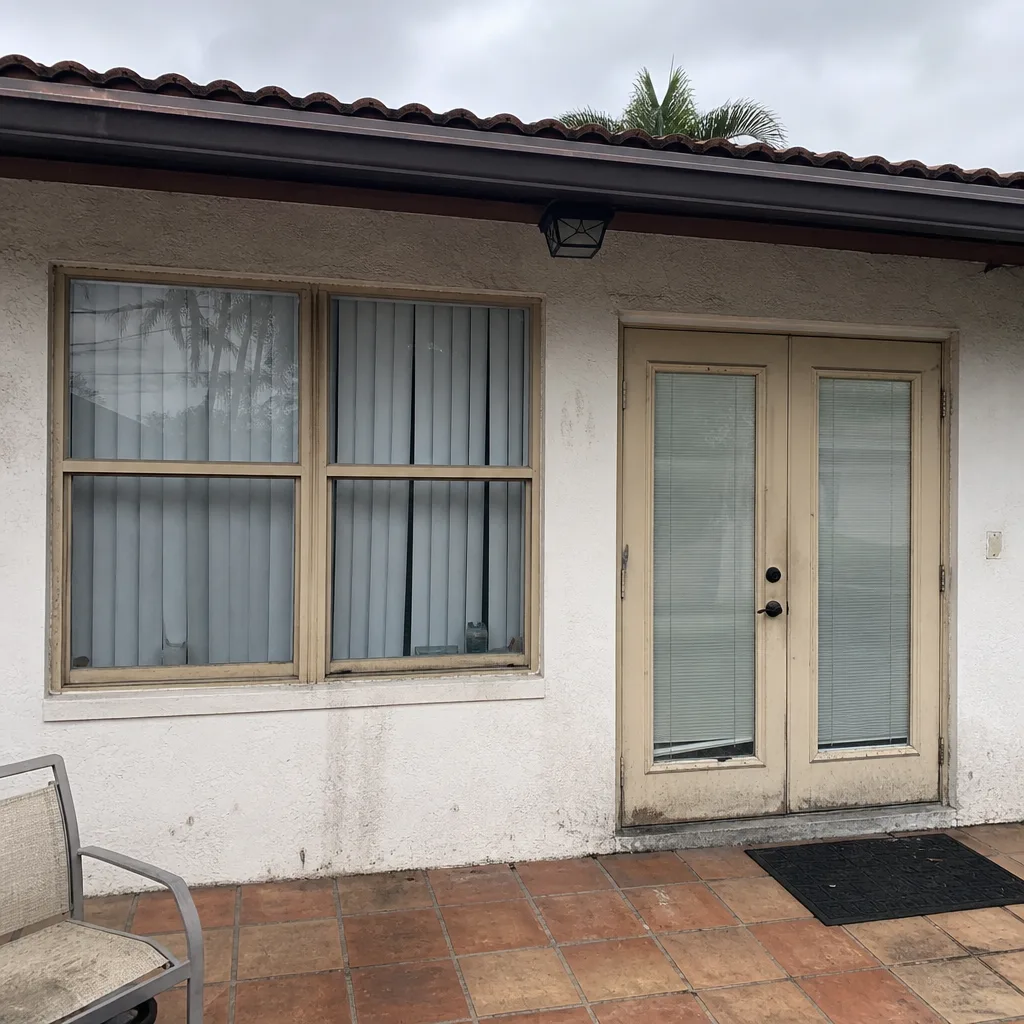 Before
 After
How to Hire a Windows & Doors Contractor in Hialeah: A Step-by-Step Guide
Most Hialeah homeowners don’t discover their window contractor cut corners until the first big summer storm, when water finds the gap between the frame and the stucco and the wind whistles through what was supposed to be a sealed opening. Hiring a windows and doors contractor is less about picking a product and more about picking a person who will answer the phone in five years. This guide walks through the entire process, from your first phone call to the final walkthrough, with the specific realities of Hialeah’s climate, building codes, and home styles in mind. You’ll learn what questions to ask, what pricing should look like, what Miami-Dade product approvals mean, and how to spot a contractor who will not be around when the warranty matters.
Quick Answer
To hire a windows and doors contractor in Hialeah, start by verifying their Florida state license and Miami-Dade County product approvals, then get written line-item quotes from at least three contractors who have installed in your specific neighborhood. The right contractor will measure every opening themselves, specify manufacturer warranty terms in writing before you sign, and have a documented local history you can verify. Avoid any bid that arrives without a site visit or any contractor who pushes you to sign before checking your HOA requirements.
Table of Contents
- Step 1: Understand What Hialeah Homes Actually Need
- Step 2: Verify Licensing, Insurance, and Miami-Dade Approvals
- Step 3: Know Your HOA Rules Before You Fall in Love with a Product
- Step 4: Get Written Quotes That You Can Compare Line by Line
- Step 5: Ask the Questions That Reveal How a Contractor Works
- Step 6: Red Flags That Should End the Conversation
- Step 7: What a Proper Installation Day Looks Like
- Common Mistakes to Avoid
- When to Call a Professional
- Frequently Asked Questions
- The Bottom Line
Key Takeaways
- Hialeah’s wind zone and humidity make Miami-Dade product approval a hard requirement for windows and doors, not a preference.
- Licensing matters: a Florida state contractor’s license (CGC or CBC) is the minimum floor, but verified local Hialeah installation history is what separates steady tradespeople from transient crews.
- Written quotes should include product make and model, glass package, installation method, permit fees, and warranty terms in writing.
- HOA rules in many Hialeah neighborhoods restrict window styles and even glass tint, so check before you choose a product.
- A contractor who measures carefully, answers the phone, and registers both warranty layers in writing is worth more than a lower bid with a handshake.
Step 1: Understand What Hialeah Homes Actually Need
Hialeah’s construction stock runs heavily toward concrete block homes built between the 1950s and the 1980s, many with original single-pane aluminum windows that have been through forty hurricane seasons. The first thing to understand is that replacing windows in Hialeah is not a matter of aesthetics alone. It’s a matter of wind resistance, water intrusion, and what happens to a frame when it sits in 90-degree heat with 80 percent humidity for six months of the year. Aluminum frames conduct heat. Single-pane glass does little to stop it. And old caulking, once it dries and cracks, becomes an entry point for the afternoon thunderstorms that roll through from late May through October.
Before you call any contractor, take a slow walk around your house and note what you’re seeing. Check for condensation between double panes, which signals a failed seal. Look for doors that bind in July and swing freely in January, a sign the frame or slab has moved with the humidity. Check the caulking around every opening; if it’s chalky, cracked, or pulling away from the stucco, water is already working its way in. Write down what you find. A contractor who walks the house with you and confirms what you’re seeing is a contractor who is measuring against reality, not against a sales script.
Hialeah homeowners also need to think about impact requirements. Miami-Dade County sits in the High Velocity Hurricane Zone, and while not every home is required to have impact-rated openings, many insurance carriers are now requiring them as a condition of writing or renewing a policy. Even if your current policy doesn’t require it, the next one might. When you talk to contractors, ask directly: “Does this product carry a Miami-Dade NOA, and will you put that number in the contract?” If they stumble on the answer, that’s your first piece of information.
Step 2: Verify Licensing, Insurance, and Miami-Dade Approvals
This is where Hialeah homeowners get burned. Florida makes it easy to check a contractor’s license online through the DBPR, and a surprising number of people skip this step entirely. Here’s what to verify before you let anyone measure a single opening:
- Florida state contractor’s license. For window and door installation, you want a certified general contractor (CGC), building contractor (CBC), or a specialty contractor with a glass and glazing designation. Write the number down, then verify it on the DBPR website. A license that has been active for years, with no disciplinary actions, tells you something. A license that was issued three months ago, or one that belongs to a different company name than the one on the bid, is a problem.
- Insurance certificates, called directly from the carrier. Ask for certificates of liability insurance and workers’ compensation. Then call the insurance company and confirm the policy is active. It takes ten minutes. It’s the only way to know the certificate wasn’t printed from a template. If one of the crew is injured on your property and the contractor has no workers’ comp, the claim can land on your homeowner’s policy.
- Miami-Dade County product approvals. Any window or door installed in Hialeah must carry either a Miami-Dade NOA (Notice of Acceptance) or a Florida Product Approval. The contractor should be able to provide the specific approval number for the exact product they’re quoting. If they can’t produce it, or if they hand you a product approval for a different model than the one on the quote, walk away.
- Local installation history. Ask which Hialeah neighborhoods they’ve worked in recently, and ask for references you can call. A contractor who has installed in Miami Lakes, West Hialeah, and Palm Springs North will know what to expect from those block homes. A contractor who only has references in Broward County may not understand what Hialeah’s stucco and tie-beam construction demands.
We’ve been installing windows and doors in this market long enough to know that licensing is a floor, not a ceiling. A license tells you the contractor met minimum state requirements. It doesn’t tell you how they’ll handle a rotted buck on a 1960s block house, or whether they’ll register both warranty layers before the technician leaves the driveway. TruePane Windows & Doors home with a simple rule: the paperwork should be complete before the technician leaves, not after the first problem shows up.
Step 3: Know Your HOA Rules Before You Fall in Love with a Product
This step saves Hialeah homeowners more frustration than any other. A significant share of Hialeah’s residential neighborhoods are governed by homeowner associations, and those HOAs have architectural review boards that regulate window styles, frame colors, glass tints, and even the type of hardware you can use. The process typically goes like this: a homeowner picks a beautiful bronze-frame impact window, gets a quote, signs a contract, and then discovers the HOA only allows white frames with clear glass and an architectural review process that takes six weeks.
Before you get attached to any product, pull out your HOA governing documents and find the architectural control section. Call the property manager and ask three direct questions: What is the review process for window and door replacement? What products, colors, and glass packages are approved? How long does review take once I submit? Some Hialeah HOAs have pre-approved lists that make the process painless. Others require full board review, which can take a month or more. Either way, you want this handled before your contractor orders product, not after.
In our experience, the most common Hialeah HOA restriction is on visible glass tint. Many associations in the Palm Springs and Country Club areas restrict reflective tint because it changes the look of the street. If you were planning on a bronze or gray tint for heat rejection, check the rules first. A low-e coating, which is invisible from the street, can give you much of the same thermal performance without running afoul of the architectural board.
Step 4: Get Written Quotes You Can Compare Line by Line
Here’s a truth that doesn’t get said often enough: a window quote that isn’t itemized is not a quote, it’s a number with a handshake attached. Hialeah homeowners comparing bids need to see the same information in the same format from every contractor, or they’re not comparing apples to apples.
Every written quote you receive should include these line items:
- Product manufacturer and exact model. “Impact window” is not a model. You want the manufacturer name (Andersen, Pella, Marvin, PGT, CGI, ES Windows) and the specific product line and series, because that’s what determines performance and warranty coverage.
- Glass package details. This includes the glass thickness, whether it’s laminated or tempered, the low-e coating, the gas fill if any, and the specific Miami-Dade NOA number for that exact configuration.
- Frame material and finish. Aluminum, vinyl, or wood, and the specific finish color. Don’t accept “white” when the contractor hasn’t confirmed which white matches your existing trim.
- Number of openings and exact dimensions. Every window and door should be listed individually, with width, height, and configuration (single-hung, casement, fixed, sliding, French, etc.).
- Installation method and materials. How will the old window be removed? What fasteners will be used? What sealant and flashing? For concrete block homes, the anchoring method matters more than homeowners realize.
- Permit and inspection fees. Hialeah requires permits for window and door replacement. The permit should be in the contract as a line item, and the contractor should pull it under their own license, not yours.
- Warranty terms, in writing. Both the manufacturer warranty and the workmanship warranty should be stated, with durations. If a contractor won’t put warranty terms in writing, the warranty doesn’t exist.
- Payment schedule. What’s due at signing, what’s due at delivery, what’s due at completion. A contractor who wants 100 percent up front is not a contractor you want to work with.
The Keystone Standard, which governs every job we install, exists because deregistered warranty paperwork is the most common failure in this industry. The homeowner thinks they have a 20-year warranty, but the manufacturer never received the registration, so the warranty was void. We register both warranty layers, in writing, before the technician leaves your driveway. Ask any contractor you’re considering whether they’ll do the same, and watch how they respond. If they hem and haw, keep looking.
Step 5: Ask the Questions That Reveal How a Contractor Works
Most homeowners ask the wrong questions. They ask about price and timeline, which matter, but they don’t ask the questions that reveal whether a contractor does the job correctly when nobody’s watching. Here are the questions that separate a craftsman from a crew that’s just turning jobs over:
- “Who will be doing the actual installation?” Some companies sell the job and then subcontract the labor to a crew that changes from week to week. Ask whether the installers are employees or subcontractors, and whether the same crew will be on your job from start to finish. Our installers are background-checked, uniformed employees who work in your home the way they’d work in their own mother’s. That’s a standard we can state in writing.
- “How do you handle a window that arrives with a manufacturing defect?” The answer reveals whether the contractor takes responsibility for the whole job or treats themselves as a middleman. We stand behind every install with a Done Right Promise. If it’s not done right, we make it right. No paperwork fights, no arguing. If a contractor can’t give you a similar answer in plain English, that’s data.
- “Will you register both warranty layers in writing before you leave?” This is the question that catches the short-cutters. Manufacturer warranties are only valid if registered properly, and many contractors simply never do it. When both layers are registered in writing before the technician leaves, you know exactly what you’re covered for and for how long.
- “What happens if the permit inspection fails?” A contractor who says “that never happens” is either lying or hasn’t done much work. Inspections occasionally catch things, and the question is whether the contractor fixes it promptly and on their own dime. A contractor who hesitates on this answer is telling you something important.
- “Can you give me three references from the last 90 days?” Contractors pick their best references. Ask for recent ones anyway, and call them. Ask the references whether the crew showed up when they said they would, whether the work was completed on schedule, and whether any issues that came up after the install were handled without a fight.
Step 6: Red Flags That Should End the Conversation
Hialeah sees a regular rotation of transient window contractors who blow in after hurricane season, work a few neighborhoods hard, and disappear when the complaints start stacking up. Here are the specific red flags we’ve watched cost homeowners real money over the years:
- The bid arrives without a site visit. Any contractor who prices windows and doors without measuring your openings themselves is guessing. A quote based on “typical” Hialeah home dimensions is not a quote, it’s a fishing line. TruePane measures every opening twice. It’s the only way to know the quote is real.
- Pressure to sign today for a price that expires at midnight. Legitimate contractors don’t run high-pressure sales floors. If a “discount” evaporates the moment you ask for time to think, the price was never real in the first place. A square deal means the price is the price, whether you sign today or next week.
- The contractor can’t produce a Miami-Dade NOA for the exact product being quoted. This is non-negotiable in Hialeah. The product approval is specific to the model, the size, and the glass configuration. A generic approval sheet that doesn’t match the quote is worthless.
- Warranty terms are verbal, not written. “Don’t worry, we’ll take care of you” is not a warranty. If the duration and terms aren’t in the contract, assume there is no warranty. We put every warranty commitment in writing because that’s the only version that means anything two years later.
- The contractor wants full payment before the job starts. A standard structure is a deposit at signing (often 30 to 50 percent), progress payment at delivery, and the balance only after the work is complete and inspected. Full payment up front is a signal the contractor is financing their cash flow with your money.
- No permits mentioned, or permits priced suspiciously low. Hialeah requires permits for window and door replacement, and permit fees have a real cost. A contractor who’s “doing you a favor” by skipping permits is doing you a problem that surfaces when you try to sell the house or file an insurance claim.
Step 7: What a Proper Installation Day Looks Like
If you’ve hired the right contractor, installation day should be predictable. Here’s what a clean window and door replacement looks like from the inside, the way we run it:
- Arrival and protection. The crew arrives on time, in uniform, and lays down floor protection and furniture coverings before any work begins. They walk the house with you to confirm the scope hasn’t changed since the quote.
- Removal and inspection. Each old window comes out carefully, and the crew takes a hard look at the rough opening. This is where hidden damage shows up: rotted wood bucks, termite trails, cracked stucco, or openings that were framed out of square. A good crew documents what they find and discusses it with you before proceeding.
- Installation, opening by opening. Each new window or door is set, squared, and shimmed properly. The rule that governs every one of our installs is simple: if the pane is not true, the job is not done. That means check every opening for level and plumb before the fasteners go in, and again after.
- Sealing and flashing. The waterproofing is the part you’ll never see, and it’s the part that determines whether your new windows leak. Flashing goes under and over the unit, sealant goes in cleanly, and the opening is detailed to shed water the way the building was designed to.
- Cleanup and walkthrough. The crew cleans the work area, removes all debris, and walks you through each opening. You see the product, you see the operation, and you get a chance to flag anything that doesn’t look right. That’s when the Done Right Promise starts running, not before.
A proper installation day in Hialeah also accounts for the weather. Rain in the forecast doesn’t always stop the job, but it changes the sequencing. Interior work can proceed while exterior sealing waits for dry conditions. A contractor who seals over wet stucco because they’re behind schedule is creating a future leak. Ask about weather contingencies before you sign, and you’ll learn something about how the contractor sequences their jobs.
Common Mistakes to Avoid
- Buying on price alone. Hialeah window pricing varies because product quality and installation quality vary. The cheapest bid on an impact window is often a product with a thin frame, a no-name glass package, and an installation crew that’s getting paid by the opening, not by the hour. You’ll pay for that bid twice.
- Skipping the HOA check. We covered this above, but it’s worth repeating because it’s the single most avoidable source of contract cancellations and restocking fees. Check the HOA before you choose a product, not after you’ve signed.
- Assuming “impact rated” means “hurricane proof.” Impact-rated windows and doors are tested to withstand specific wind pressures and missile impacts, but they are only as good as the installation. A properly tested window set into a poorly sealed opening is a leak waiting for the first real storm.
- Not registering warranties, or trusting the contractor to do it. This is the most expensive mistake on the list, because it surfaces years later when a seal fails and the manufacturer says the warranty was never registered. The fix is simple: get written confirmation that both warranty layers are registered before final payment.
- Replacing windows without addressing the doors. Hialeah homes lose as much conditioned air through old sliding glass doors and entry doors as they do through windows. If you’re doing windows, have the contractor look at the doors in the same visit. Bundling the work often brings the price down per opening.
- Accepting a verbal promise for anything. Verbal promises aren’t worth the paper they’re printed on, as the old line goes. If a contractor won’t put it in writing, assume it won’t happen.
- Letting the contractor pull permits under your name. Permits should be pulled under the contractor’s license. If a contractor asks you to pull the permit as the homeowner, that’s often a sign their license has issues.
When to Call a Professional
Some window and door issues are obvious: water on the floor after a storm, a door that won’t latch, glass that’s cracked through. Others are quieter, and they get worse slowly. Condensation fog between panes means the seal has failed and the insulated glass unit is dead; there’s no DIY fix for that. Frames that have pulled away from the stucco, caulking that’s cracked and chalky, sashes that stick or won’t stay open, and doors that bind seasonally are all signs the opening needs professional attention. If you can feel air moving around a closed window on a windy day, or if your energy bills have crept up year after year without a weather explanation, it’s time to have a pro look. TruePane Windows & Doors offers free estimates in Hialeah. Call (386) 977-5410 and a live person will answer, any hour, any day.
Frequently Asked Questions
Window replacement in Hialeah typically runs between $650 and $2,800 per opening depending on size, product, and whether the window carries Miami-Dade impact approval, with entry doors ranging from $1,200 to $7,000 and sliding glass doors often falling between $1,800 and $6,500 installed. The spread is wide because a standard single-hung in a stock size is a very different product from a custom impact-rated casement with a low-e glass package. Call (386) 977-5410 for an exact quote. Estimates are free, and you’ll get a written line-item number you can compare against other bids.
Yes, Hialeah requires permits for window and door replacement, and the contractor should pull the permit under their own license as part of the job. If a contractor suggests skipping the permit to save money, find another contractor; unpermitted work can complicate a future sale and give your insurance company grounds to deny a claim.
For a typical Hialeah three-bedroom block home with 10 to 15 openings, a full replacement takes two to five working days with a properly staffed crew, though custom products and impact-rated glass can add four to eight weeks to the order lead time before installation begins. The install days are the fast part; the product manufacturing is what takes the calendar time.
A Miami-Dade NOA is the stricter of the two approval standards and applies specifically to products tested for the High Velocity Hurricane Zone, while a Florida Product Approval is a statewide standard that may not meet Miami-Dade’s wind-borne debris requirements. In Hialeah, you want the NOA. It means the product has been tested to the standard your building inspector will look for.
It shouldn’t, unless the crew discovers hidden damage in the rough opening that couldn’t be seen until the old window came out, and a reputable contractor will stop and show you exactly what they found before any additional work proceeds. The time to clarify this is before you sign: ask directly whether the quoted price includes the full installation as described, and get that answer in writing. A square deal means no surprise line items on the bill.
Yes, impact-rated windows and doors can qualify for wind mitigation credits on Florida homeowners insurance policies, and in some cases they’re becoming a requirement for carriers to write or renew coverage in Hialeah. Talk to your insurance agent about what documentation they’ll need after installation, because the paperwork has to match the product approval number exactly. Call (386) 977-5410 if you want help understanding what your product approval documents look like after install. The ask is free.
The Bottom Line
Hiring a windows and doors contractor in Hialeah comes down to verification and written promises. Verify the license, the insurance, and the Miami-Dade product approval. Get written quotes that line up item for item, and check your HOA before you fall in love with a product. Ask the questions that reveal how a contractor works when nobody’s watching, and walk away from any bid that comes with pressure tactics or verbal-only warranties. The contractor who measures twice, registers both warranty layers in writing, and answers the phone when you call five years later is the one worth hiring. In our experience, that’s what done right actually looks like.
Written by the team at TruePane Windows & Doors.
Six Reasons Homeowners Choose TruePane Windows & Doors
Impact systems engineered to design pressures up to +/-100, matched to your wind zone - your openings hold when the storm arrives.
Low-E insulated impact glass from our manufacturer lines commonly cuts monthly cooling bills 20-30%.
Laminated impact glass shuts out up to 40% of outside noise - traffic, neighbors, weather.
Monitoring services run $30-90 a month. Laminated impact glass resists forced entry around the clock, with no subscription.
Florida homeowners average around 25% savings on the windstorm portion of their policy after protecting every opening - some homes qualify for more.
A full impact package upgrades curb appeal, buyer confidence and appraised value in one project.