
Last updated August 25, 2026
Free in-home measure and quote - PGT, CGI and CWS impact lines compared on your actual openings, style by style
Sliding glass doors
Impact garage doorsPGTCGI
 Before
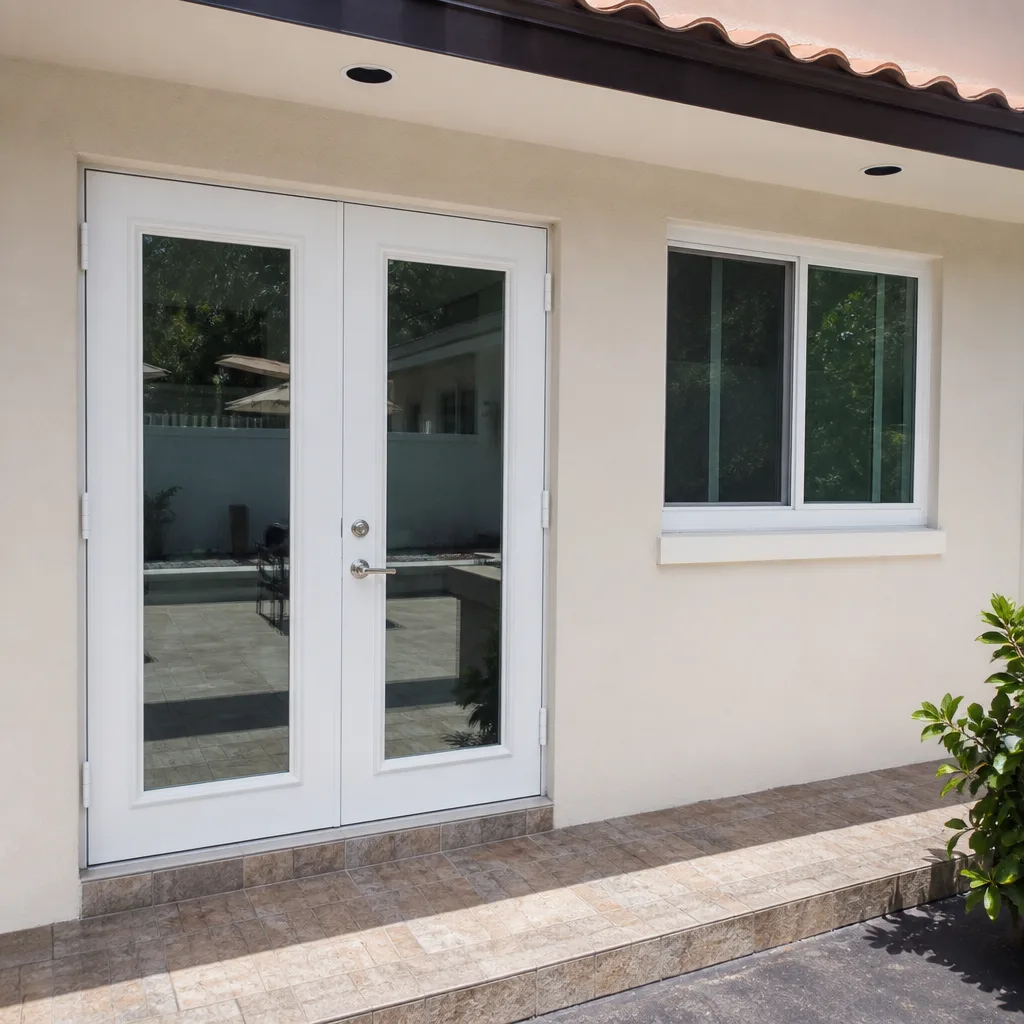 After
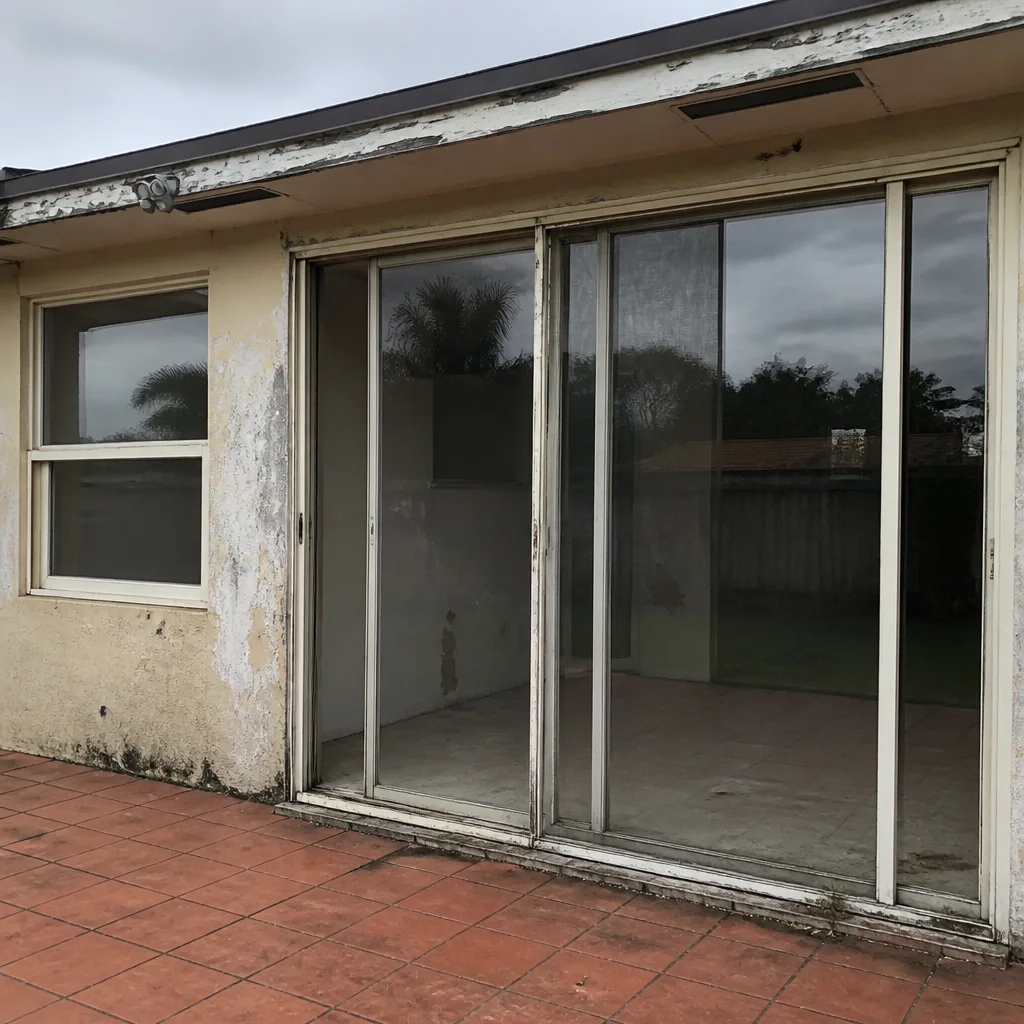 Before
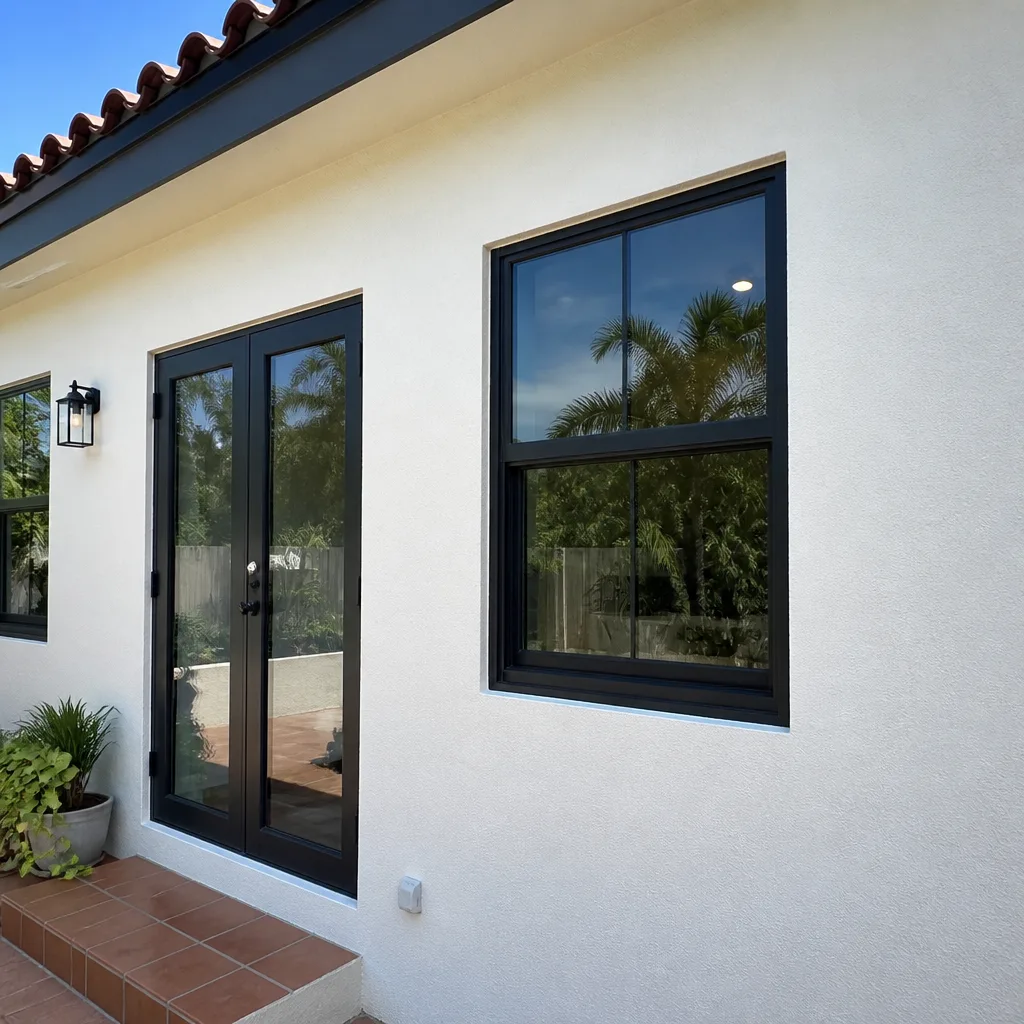 After
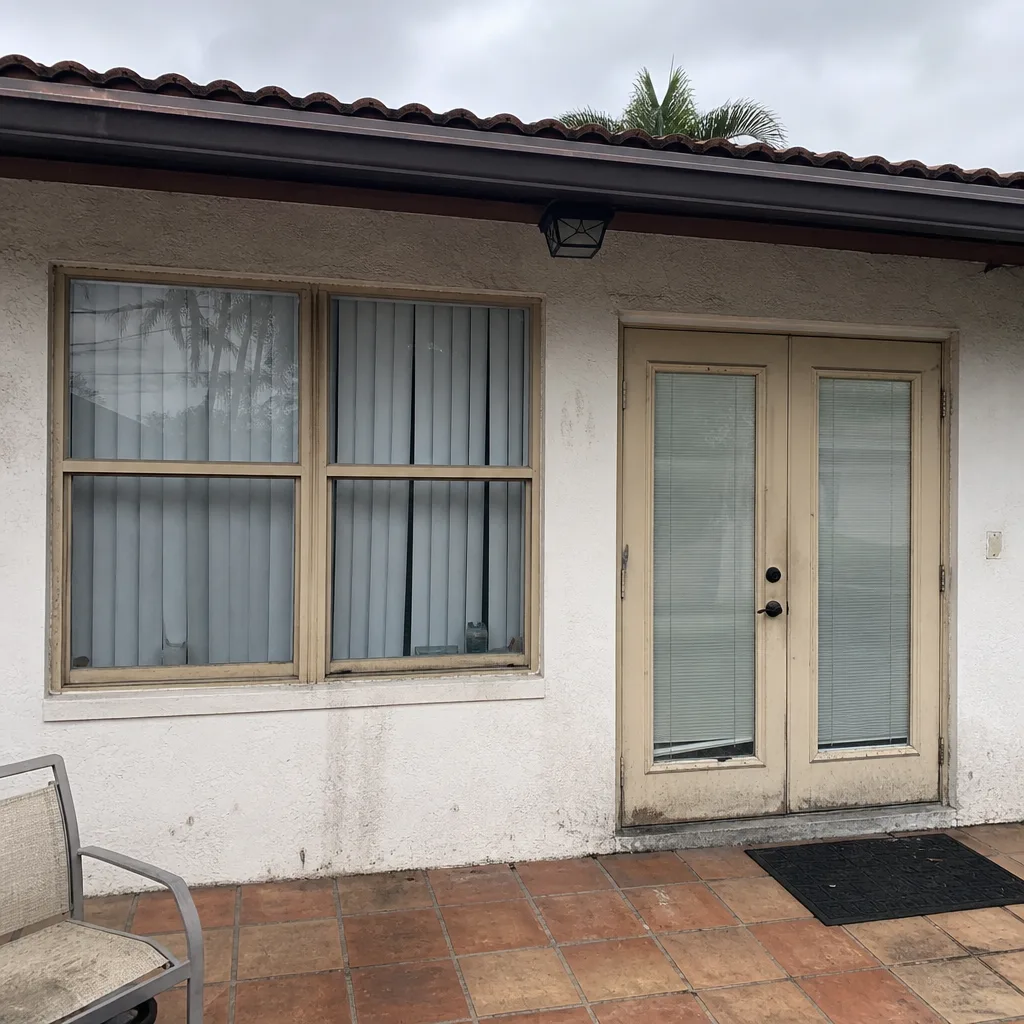 Before
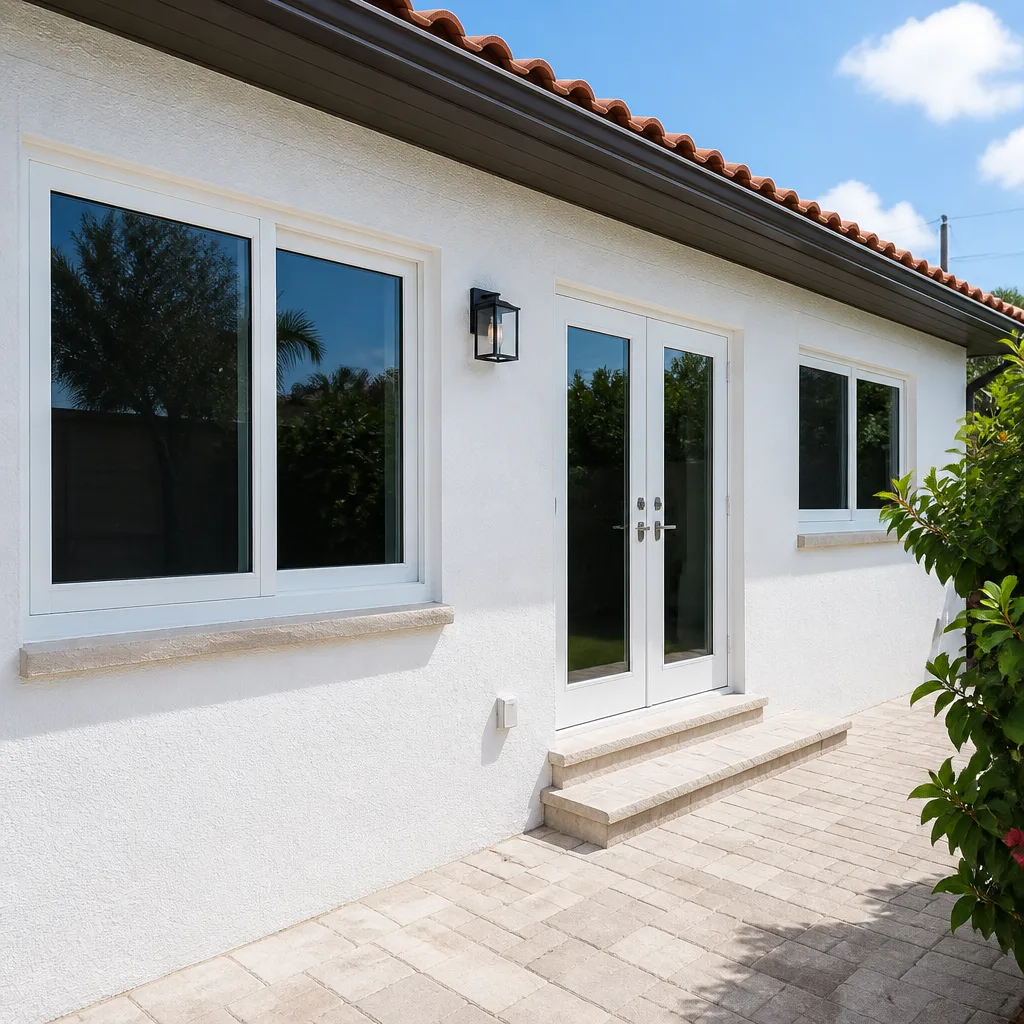 After
Windows & Doors Warning Signs: A Hialeah Homeowner’s Reference Guide
Most Hialeah homeowners don’t replace a window because it looks old. They replace it because it stopped doing its job quietly. The real warning signs are rarely dramatic cracks or shattered glass. They’re the slow, cumulative symptoms: a window that sweats between the panes every humid August morning, a sliding door that takes real shoulder to move, a frame that feels soft when you press a thumb into the corner. This guide walks through every warning sign that matters in Hialeah’s specific climate, what each one actually means, and when it’s a repair versus a replacement call.
Quick Answer
The clearest warning signs that a window or door needs attention in Hialeah are condensation or fog between glass panes, visible daylight around door edges, drafts you can feel on windy days, difficulty opening or closing, wood that feels soft or spongy, and rising cooling bills that don’t match the thermostat setting. Most of these point to failed seals, frame rot, or settlement. If you spot two or more of these signs in the same room, get a professional assessment before the next rainy season.
Table of Contents
- Condensation and Fog Between the Panes
- Drafts You Can Feel, Not Just Measure
- Windows and Doors That Fight Back
- Soft Wood, Flaking Paint, and Frame Damage
- Impact Windows: What Hialeah Code Actually Requires
- Energy Bills That Keep Climbing for No Reason
- Street Noise Getting Louder Year Over Year
- Water Stains and Intrusion Around Openings
Condensation and Fog Between the Panes
This is the warning sign we hear about most from Hialeah homeowners, and it’s also the most misunderstood. If you see moisture or fog trapped between the two layers of glass in a double-pane window, that’s a failed seal. It cannot be cleaned off from either side, and it will not fix itself.
Here’s what’s happening. Modern double-pane windows hold a sealed air space between the glass layers, often filled with argon gas or similar inert fill. That space is what gives the window its insulating value. When the perimeter seal fails, regular humid air gets in, the argon escapes, and the window loses most of its thermal performance. In Hialeah’s humidity, the trapped air condenses on the inside face of the glass. You’ll notice it most in the morning, then it may fade as the day warms.
The practical consequences are threefold. First, the view through that pane is permanently hazy. Second, the window’s insulating value drops, which means your air conditioning works harder. Third, and often overlooked, is that a failed seal is now a moisture pathway. Over years, that trapped moisture can begin to affect the frame, especially in older wood frames common in Hialeah’s mid-century homes.
The fix is either replacing the insulated glass unit, often called an IGU, or replacing the entire sash. In many cases the frame is still sound and a glass-only replacement is the right call. A glazier who measures carefully can replace the IGU in a single visit. What you should not do is ignore it. A fogged pane is a failed pane. It’s no longer insulating, and in Hialeah’s climate every failed pane is a small, persistent leak of cooled air.
Drafts You Can Feel, Not Just Measure
A draft is not always a window problem. Sometimes it’s a weatherstripping problem, which is cheap to fix. The skill is knowing which one you have.
Stand near the window on a reasonably still evening. If you feel air moving around the edges of the sash where it meets the frame, that’s weatherstripping. Compression gaskets, felt strips, and silicone bulbs all wear out eventually. After five to ten years of Hialeah heat and humidity, rubber and foam weatherstripping loses its spring. The fix is often simple: clean the channel, replace the stripping, adjust the lock to pull the sash tighter.
But if you feel a draft through the glass itself, that’s different. That means the window has thin glass, no low-E coating, or a failed insulating space. Single-pane windows, still found in many older Hialeah homes, don’t draft exactly, but they transfer heat so readily that standing near one feels like a warm draft on a hot afternoon. That’s radiant heat, and no weatherstripping will fix it.
For doors, the usual culprits are worn sweeps at the bottom, deteriorated weatherstripping in the jambs, or a threshold that has settled out of level. A door sweep is a fifteen-minute fix. A threshold that’s out of level, though, usually means the door slab itself has sagged on its hinges or the subfloor has moved. Pay attention to where the draft comes from. Bottom drafts point to the sweep or threshold. Side drafts point to hinges, weatherstripping, or a frame that has racked out of square.
Windows and Doors That Fight Back
In Hialeah, we see a specific pattern. Wood windows that operated fine for thirty years start to bind in late summer, then free up in winter, then bind worse the next year. That cycle is wood absorbing moisture, swelling, then drying out repeatedly. Each cycle leaves the wood slightly more distorted than before. Eventually the sash won’t open at all, or it opens but won’t stay up, or it drops shut when you let go.
A double-hung window that won’t stay up typically means failed sash balances. Those are the spring or counterweight mechanisms hidden in the side channels. On newer vinyl windows they’re often a constant-force coil. On older wood windows they may be weights on cords. When they fail, the sash becomes a dead lift, and worse, it can slam shut on fingers.
Sliding doors have their own failure signature. A patio door in Hialeah that gets harder to push each year usually has worn rollers. The rollers underneath the door panel are small wheels riding on a track. When they wear flat or the bearings seize, the entire weight of the door drags on the track. Homeowners compensate by pushing harder, which accelerates the wear. You’ll hear grinding or feel a gravelly vibration. The fix is replacing the rollers and often cleaning or replacing the track.
The operating principle is simple: if you’re using more than about five pounds of force to move a window or sliding door, something has failed mechanically. A properly maintained window glides. A properly adjusted sliding door moves with one hand. Force is a warning sign.
Soft Wood, Flaking Paint, and Frame Damage
Press your thumb gently into the lower corner of a wood window frame. If it gives, if it feels even slightly spongy, that’s rot. Not cosmetic. Structural. In Hialeah’s wet season, wood frames that were never properly primed on all six sides will wick water from the sill upward. Once rot starts, it doesn’t stop. It spreads through the wood like rust through steel, and every season it compromises more of the opening.
Flaking or bubbling paint on a window or door frame is the early signal. Paint doesn’t blister in isolation. Water gets behind it and pushes it off the substrate. By the time you see peeling paint, moisture has already been in the wood long enough to break the bond. The question is how deep it goes.
Vinyl frames don’t rot, but they have their own failure modes. Look for cracking at the welded corners, especially where the frame meets the sill. Look for discoloration that won’t clean off, which can mean UV degradation. And look for warping: a vinyl frame that bows inward or outward is telling you the glass unit is no longer properly supported. That weakens the whole assembly.
Aluminum frames, common in older South Florida construction, corrode in the salt air. You’ll see white powder at the corners and pitting on the surface. Aluminum corrosion around the weep holes is especially concerning, because it means water that should be draining out is instead sitting against the frame and eating it away.
Impact Windows: What Hialeah Code Actually Requires
Florida building code is blunt about wind-borne debris zones. Hialeah sits near the coast, and most of the city is in a wind-borne debris region, which means if you’re replacing windows or doors, the new units generally need to be impact-rated or protected by an approved shutter system. This isn’t a cosmetic preference or a sales tactic. It’s code.
Here’s what that means in practical terms. An impact-rated window has laminated glass, similar to a car windshield. When a hurricane throws a two-by-four at it at 50 miles an hour, the glass may crack but it won’t shatter out of the frame. The interior layer holds, and your roof stays on, because the sudden pressure change from a blown-out window is what lifts roofs off houses.
There are two paths to code compliance. The first is impact-resistant glazing, where the window itself is rated. The second is a non-impact window protected by a tested and approved cover system. In practice, most Hialeah homeowners replacing their original windows choose impact glass for the noise reduction and the one-time install, versus maintaining and deploying shutters every storm season.
If you’re buying a home or replacing windows, verify the product approvals. A legitimate impact product carries a Florida Product Approval number or Miami-Dade NOA. The installer should document it. If a contractor says the window is “hurricane rated” but can’t show you the approval paperwork, that’s a warning sign of the loudest kind.
Hialeah also has its own municipal building permit process. Replacing windows and doors requires a permit, and the work needs to pass inspection. A contractor who suggests skipping the permit is asking you to absorb the liability. When you sell the house, unpermitted work becomes a negotiation handicap at best and a code enforcement issue at worst.
Energy Bills That Keep Climbing for No Reason
Your air conditioner has no idea what the outside temperature is. It only knows the thermostat setting and the temperature inside. When your electric bill climbs while your comfort stays flat or falls, the usual suspect is heat gain through the building envelope. And in a Hialeah house, the envelope is mostly windows and doors.
Single-pane clear glass transmits roughly 85% of solar heat. Old double-pane without low-E coating does better but still lets a lot through. Modern low-E impact glass reflects a substantial portion of the infrared spectrum while letting visible light pass. The difference on a west-facing wall in Hialeah in August is not subtle. It’s the difference between a room that stays at 76 and a room that fights to stay under 80.
Here’s a simple field test. On a bright afternoon, walk around the house and hold your hand about six inches away from the inside surface of each window. If the inside glass feels warm to the touch, that window is not doing its job. Heat is entering the house in real time. Your AC unit is removing that heat at roughly the same rate. You’re paying for it on the FPL bill.
New windows won’t eliminate your electric bill. They won’t cut it by seventy percent either. But on a 1960s or 1970s Hialeah ranch with original single-pane windows, replacing them with modern low-E impact units typically reduces heat gain through the glass by enough to notice on the next cooling season’s bills. The exact number depends on orientation, shading, and a dozen other factors. Any window company that quotes you a guaranteed percentage savings is guessing.
Street Noise Getting Louder Year Over Year
Hialeah has its own soundscape. If you live near West 49th Street, the Palmetto Expressway, or any of the busier commercial corridors, you know the rhythm. What you may not have noticed is the incremental change. Traffic noise doesn’t get dramatically louder in a year. It creeps. One more bus route. One more car on the road. One more delivery truck at 6 a.m.
Glass is the weakest acoustic link in any wall. A single pane of quarter-inch glass blocks a single-digit percentage of the sound energy hitting it. A properly constructed double-pane window with laminated glass can reduce perceived noise dramatically. Laminated impact glass, which Hialeah owners install for code compliance anyway, has a hidden benefit: the plastic interlayer that stops hurricane debris also dampens sound transmission.
The practical warning sign is simple. If you’ve noticed yourself turning up the television volume year over year, or if you can now hear individual conversations at the bus stop through a closed window, your glass is not performing. Upgrading to laminated impact windows in Hialeah is one of the few improvements that genuinely serves two masters: building code and quality of life.
Water Stains and Intrusion Around Openings
Water doesn’t need a gaping hole. It needs a pinhole, a hairline joint, a failed bead of caulk, and time. In Hialeah’s five-month wet season, the time is plentiful.
The first sign is usually a water stain. It starts at the corner of a window or door frame and spreads outward, brownish on drywall, grayish on stucco. Sometimes it’s subtle enough that you write it off as a shadow. Then it grows. Then the paint starts to bubble. By the time you see a drip, the leak has been active for weeks or months.
Window and door openings are flashed during installation. Flashing is the system of tapes, membranes, and shingled overlaps that directs water away from the rough opening and back out to the exterior face of the wall. In older Hialeah construction, flashing was often minimal or absent. Caulk was the primary defense. Caulk lasts about five to ten years in this climate before it cracks, shrinks, and loses adhesion.
When water gets into a wood-framed wall, the damage compounds. Rot spreads. Termites, which are endemic in Hialeah soil, find the softened wood quickly. Mold colonizes the damp drywall. A leak that starts as a two-inch water stain in July can be a four-figure wall repair by the following spring.
Pay particular attention to the heads of windows and doors. Water flowing down a wall passes over the top first. If the head flashing was installed wrong, water will enter at the top and travel down inside the jamb. You might not see any stain at all until it reaches the sill, which is the worst case, because by then it has passed through the entire opening.
Common Mistakes to Avoid
- Caulking over a failed seal. Caulk is for keeping exterior water out at the frame-to-wall joint. It can’t fix a broken seal between glass panes, and slathering it over the seam of a fogged window just traps moisture against the frame.
- Replacing glass without addressing the frame. If the frame is rotted or racked out of square, a new IGU will be stressed from day one and the new seal will fail prematurely. Fix the opening first, or replace the whole unit.
- Painting over rot. Wood filler and a fresh coat of paint make the sill look right for one season. The rot underneath keeps spreading. In Hialeah’s humidity, this is a losing game.
- Skipping the permit on window replacement. Hialeah requires permits for window and door replacement. Unpermitted work creates liability at sale, potential insurance complications, and no inspection record that the install met code.
- Treating every window as an emergency. One fogged pane is a fix, not a full-house replacement. A reputable glazier will tell you which windows need work now and which can wait. Beware the company that finds twenty-seven urgent failures in a ten-year-old house.
- Choosing price over product approval. In a wind-borne debris zone like Hialeah, an off-brand window without proper Florida approval documentation may not pass inspection. Then it’s not a bargain. It’s a liability.
- Ignoring door hardware problems. A sliding door that sticks gets forced. Forcing it bends the frame, which makes it stick worse, which gets it forced harder. Fix rollers and hinges before the forcing damages something structural.
When to Call a Professional
Some warning signs are informational. You can note them and plan for them. Others are an active problem that gets more expensive every week. Call a professional when you find soft or spongy wood anywhere in a window or door frame, when water is visibly entering during rain, when a window or door cannot be opened or closed at all, or when you’re replacing anything that falls under Hialeah’s wind-borne debris code requirements. A failed seal on one pane is worth quoting, but it’s not an emergency. Frame rot is closer. Water intrusion is now. If you’re in the Hialeah area, TruePane Windows & Doors offers free estimates on replacement and repair work, and we’ll tell you straight if a window doesn’t need replacing yet. Call (386) 977-5410 to schedule one.
Frequently Asked Questions
How long do windows last in Hialeah’s climate?
A well-installed quality window in Hialeah typically lasts 20 to 30 years before the frame or glass starts showing meaningful decline. The climate accelerates two specific failures: seal failure from constant humidity cycling and frame rot in wood windows that weren’t perfectly flashed and sealed. A window installed poorly may show signs in five years. A window installed by a craftsman who measured twice may go thirty-plus with routine hardware maintenance and occasional weatherstripping.
Can a fogged window be fixed without replacing the whole thing?
Yes. In many cases the insulated glass unit can be replaced while keeping the existing frame and sash. The glazier measures the opening precisely, orders a matching IGU, and installs it in a single visit. This is typically less expensive than a full window replacement. The exception is when the frame itself is damaged or the window is old enough that matching the glass package isn’t practical. Call (386) 977-5410 for an assessment before you assume the whole window needs to go.
Are impact windows mandatory in Hialeah?
For new window and door installations, yes, in most of Hialeah the building code requires impact-rated products or an approved shutter system. Existing windows that predate the requirement can generally remain until they’re replaced. Once you replace them, the new units must meet current wind-borne debris standards. A licensed contractor who pulls permits will know the exact requirement for your street address.
How much does window replacement cost in Hialeah?
Costs vary by product line, size, and code requirements, but expect a significant investment on a per-opening basis. Impact-rated laminated glass costs more than standard double-pane, and larger custom openings cost more than stock sizes. The right way to shop is to get side-by-side quotes on specific manufacturer lines in writing, so you can see exactly what each price includes. TruePane provides written line-item quotes. Call (386) 977-5410 for a free estimate.
Will the price change once the work starts?
Not if the estimate was based on an honest in-person assessment. The things that change prices mid-job are hidden rot discovered after the opening is exposed, custom sizes that weren’t accurately measured, or a lowball bid that was never complete to begin with. A legitimate quote anticipates typical conditions and states its assumptions in writing. If a contractor can’t give you a firm number before starting, keep looking.
Do you pull permits for window and door replacement in Hialeah?
Yes. Every replacement job that requires a permit under Hialeah code gets permitted, inspected, and closed out before we consider the job done. It’s part of the work. A contractor who wants to skip permits is transferring legal and financial risk onto you, and that’s never a square deal.
The Bottom Line
Windows and doors don’t fail dramatically. They send signals: a fogged pane in the morning, a draft at the edges, a door that needs a shoulder, a bill that keeps climbing. None of these signals gets better on its own, and in Hialeah’s heat and humidity, each one gets a little worse every season. The smart approach is to learn what each warning sign means, handle the small mechanical fixes early, and get a straight assessment when the frame, the glass, or the code compliance is in question. Pay once for work done right, and you won’t be back in the same opening five years later.
Written by the team at TruePane Windows & Doors.
Six Reasons Homeowners Choose TruePane Windows & Doors
Impact systems engineered to design pressures up to +/-100, matched to your wind zone - your openings hold when the storm arrives.
Low-E insulated impact glass from our manufacturer lines commonly cuts monthly cooling bills 20-30%.
Laminated impact glass shuts out up to 40% of outside noise - traffic, neighbors, weather.
Monitoring services run $30-90 a month. Laminated impact glass resists forced entry around the clock, with no subscription.
Florida homeowners average around 25% savings on the windstorm portion of their policy after protecting every opening - some homes qualify for more.
A full impact package upgrades curb appeal, buyer confidence and appraised value in one project.